La Moreneta – the Black Madonna of Montserrat
The Black Madonna of Montserrat is also known as ” Our Lady of Montserrat .” In Catalan, she is “Mare de Déu de Montserrat” and locals colloquially call her La Moreneta, meaning “Little Black One”. She received this name because of her dark complexion. She is an important religious figure and the patron saint of Catalonia. This special Madonna is housed in the Montserrat Monastery, one of the most important pilgrimage sites in Spain. Only Santiago de Compostela attracts more pilgrims!
Legend has it that the first statue of the Virgin Mary was discovered around the year 880 by some shepherd boys in a cave on Montserrat mountain. When the Bishop of Barcelona learned of this and tried to bring the statue to Manresa, it proved inexplicably heavy. It could not be moved. This was interpreted as a sign that the Madonna wished to remain where she had been found. Subsequently, the Hermitage of Santa Maria was built on the site of the present-day monastery. The statue venerated today dates from the 12th century.
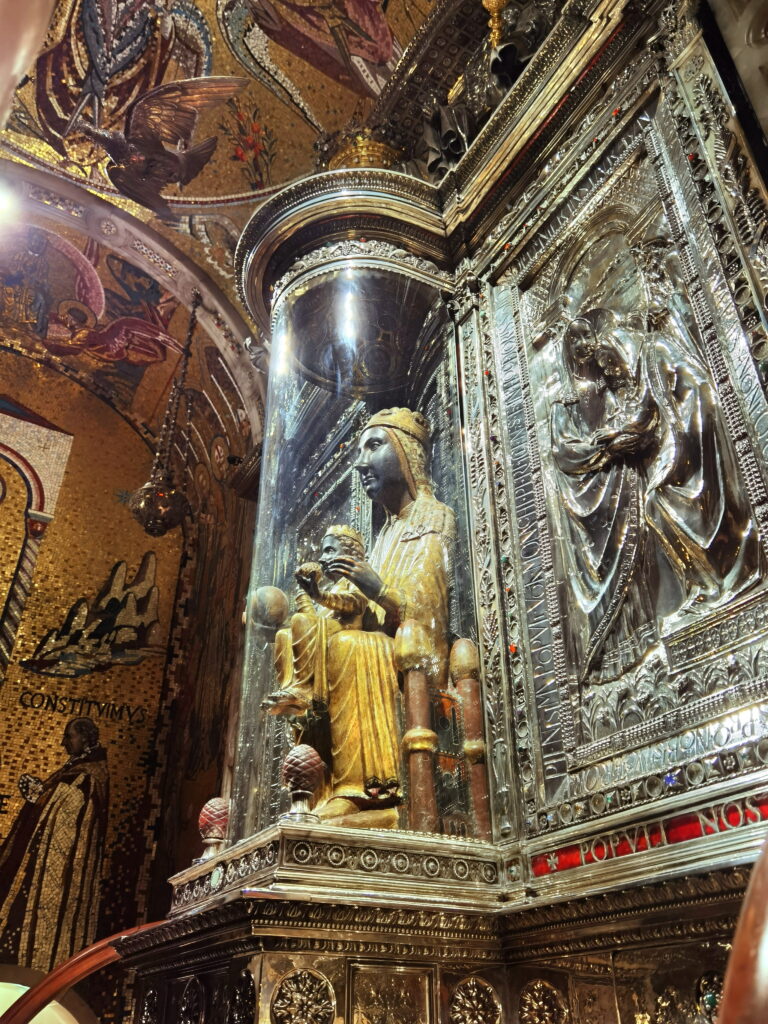
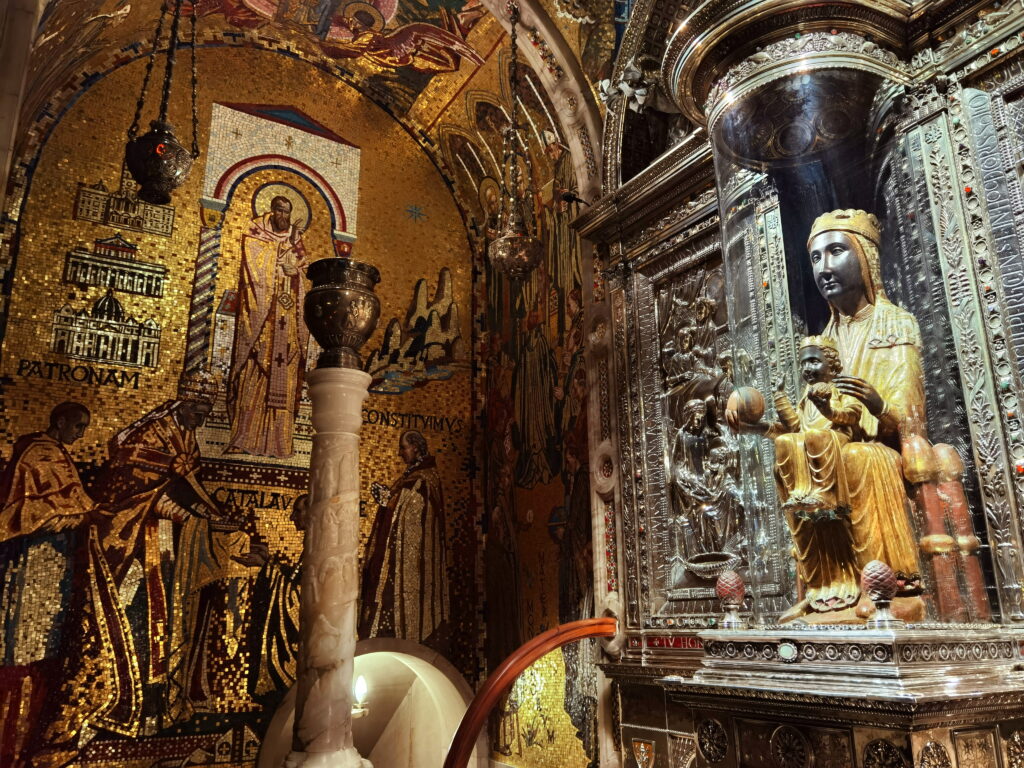
The Black Madonna of Montserrat is a Romanesque statuette carved from poplar wood , approximately 95 cm tall. Except for her face and hands, she is entirely gilded . The Madonna sits on a throne, supporting the Christ Child. Both wear crowns, and the Madonna holds a globe in her right hand, a symbol of the world . The Christ Child holds a pine cone. The Madonna herself is almost black, which is why she is also known as “La Moreneta” (The Black Madonna). You will see the Black Madonna positioned centrally in the sanctuary, surrounded by gold. From the church’s interior, she appears relatively small due to the size of the basilica, even though she is almost a meter tall.
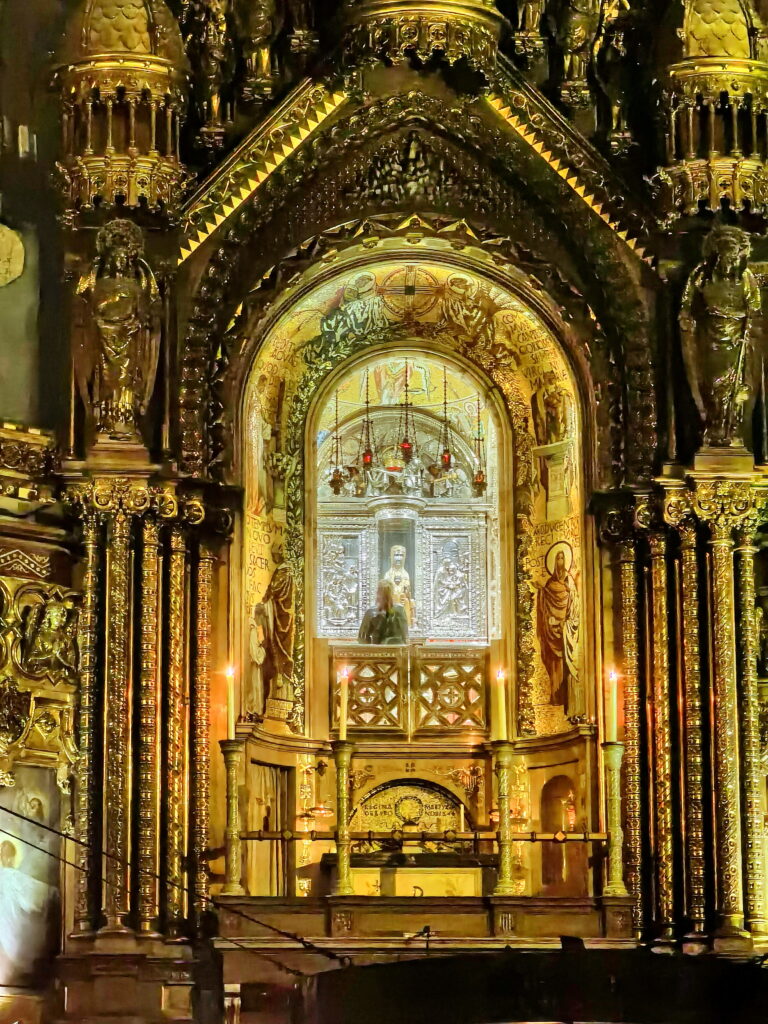
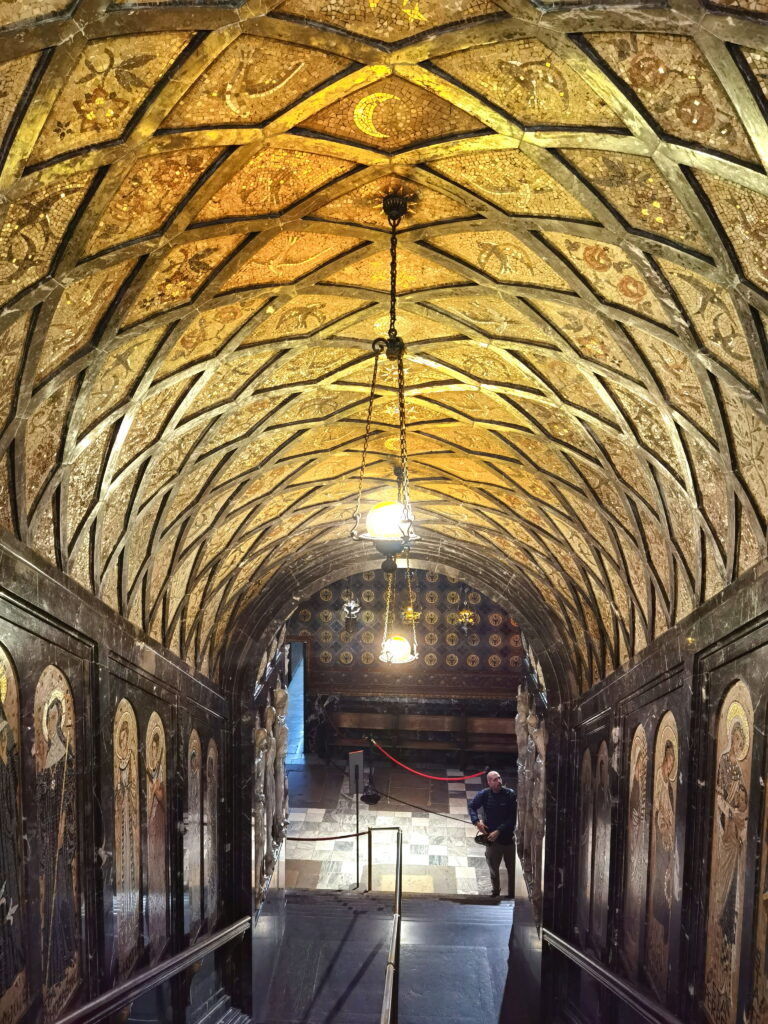
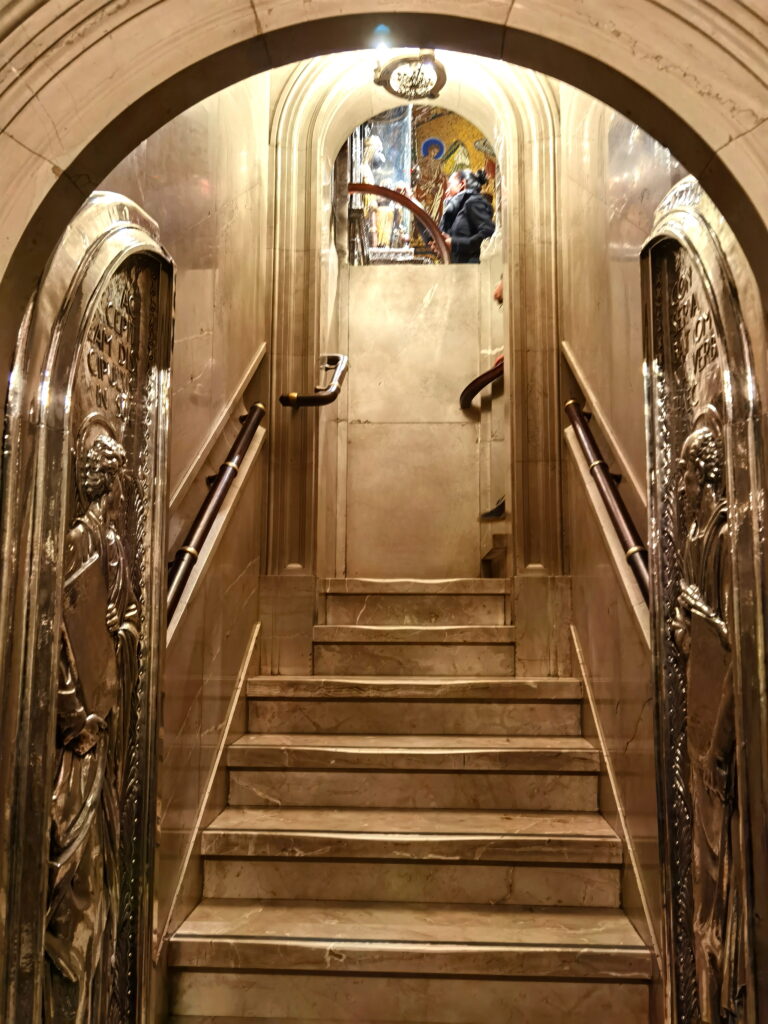
The access to the Black Madonna of La Moreneta is quite remarkable . A hidden passage leads to the Black Madonna to the right of the main church nave, behind the side altars. It is open to the public – for a fee. You will find the entrance to this passageway to the right of the basilica’s main entrance. Book your ticket in advance to gain entry. Due to the extreme popularity of the statue and the large number of visitors, you should expect a wait, even with a ticket! The crowds are greatest during holidays, church festivals, and generally in the late morning and early afternoon. There are security personnel from the monastery who control and regulate visitor access to the Black Madonna.
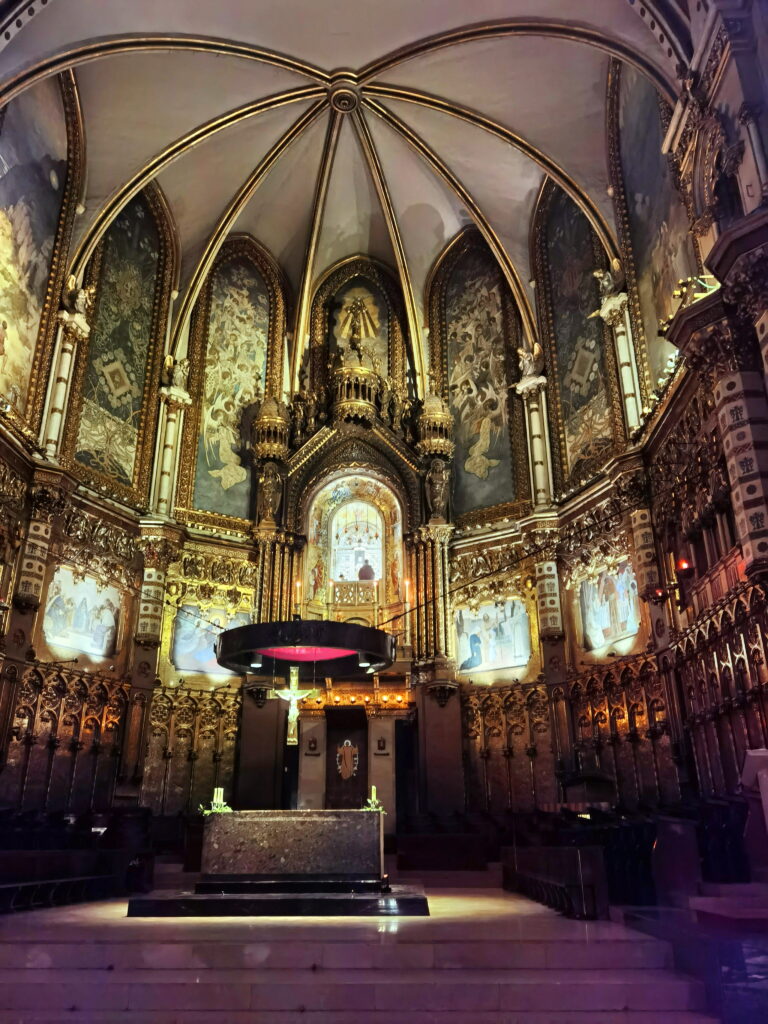
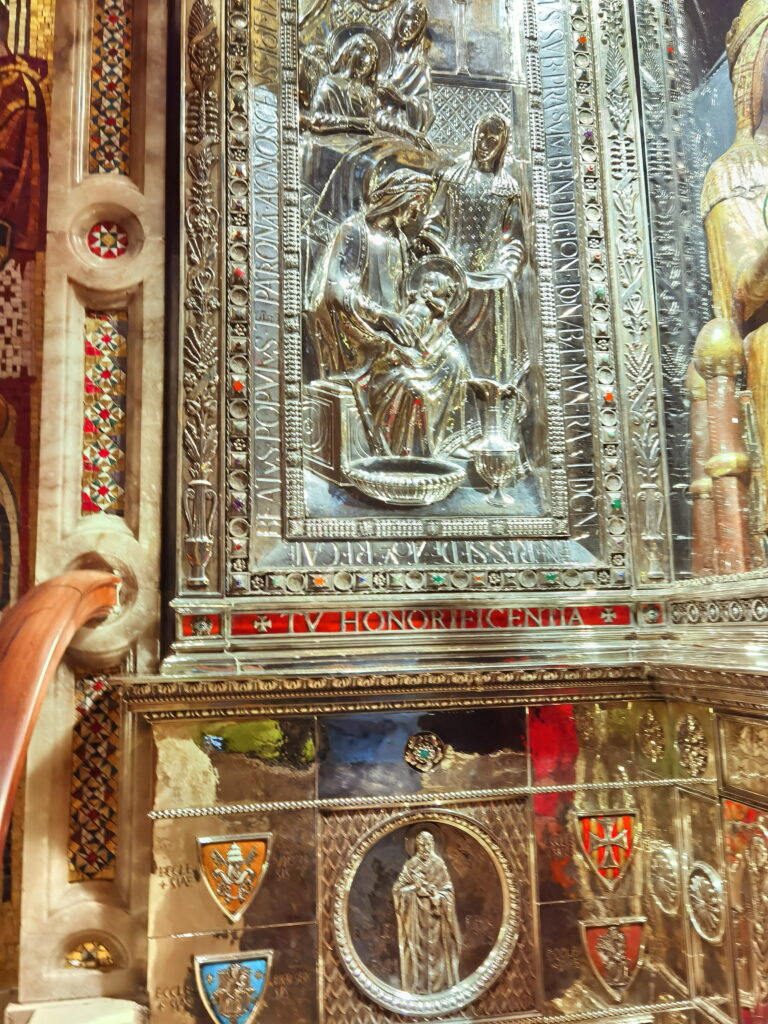
Once you’ve gotten past the queue at the entrance, follow the narrow passageway . After visiting the church, we also visited the Madonna. We walked single file through the passageway. It’s just wide enough for one person to pass at a time. Access for wheelchairs or strollers is impossible. The passageway leads across a stone floor towards the altar and then up grand steps. Some of the staircases and passageways are extremely ornate. Everything glitters and sparkles. Gold and silver dominate the scene. The white columns could easily be mistaken for ivory .
Every visitor to the Black Madonna is welcome to touch the figure. In her right hand, she holds a wooden sphere. This symbol of the world may be touched; the rest of the Madonna is protected from visitors by a glass panel. Behind the Madonna, a narrow passage to the left of the altar area leads back to the square in front of the basilica. The last few meters are lined with candles. Here you can buy a candle and place it. Typical for Southern Europe: the candles are not only available in white, but in many bright colors. And yes: if you would like to offer more than just a candle, there are numerous figures with slots for monetary donations around the Black Madonna.
The veneration of the Black Madonna
- The hymn to the Virgin of Montserrat, known as ” el Virolai ,” is sung every day at noon by the boys’ choir Escolania de Montserrat . It begins with the words: “Rosa d’abril, Morena de la serra…” (Rose of April, dark-skinned mountain woman…). Therefore, this Virgin is sometimes also referred to as “Rosa d’abril.”
- On September 11, 1881 , the Catalan national holiday , the Black Madonna was declared the patron saint of Catalonia by Pope Leo XIII .
- She is venerated as a patron saint alongside Saint George. Her anniversary is celebrated on April 27th.
- Visitors are welcome to access the statue of Mary daily from 8:00 to 10:30 am and from 12:00 to 6:30 pm.
The figure of the Black Madonna of Montserrat holds great cultural and religious significance for Catalonia and is an important symbol of Catalan identity. It attracts approximately 2 million pilgrims and tourists annually who wish to experience its spiritual presence.
MONTSERRAT MONASTERY TICKET
If you want to visit the Black Madonna, you need a ticket. Since it’s very popular, it’s worth planning ahead and securing your ticket. There are various ticket combinations available, depending on what you want to see. Here’s an overview of the currently available tickets:
–> Montserrat Ticket
Further links for your trip
- all the information about Montserrat, Barcelona
- worth knowing about the monastery of Montserrat
- the current monastery of Montserrat prices
- so, are you coming with the Montserrat rack railway to the monastery
- here you can, at the monastery of Montserrat Parking
- note the Montserrat opening Hours
Frequently Asked Questions
La Moreneta, also known as the Black Madonna of Montserrat or Mare de Déu de Montserrat in Catalan, is an important religious figure and patron saint of Catalonia. The statue is a Romanesque wooden statuette of the Virgin Mary with the Christ Child on her lap. It is often translated as “The Little Dark-Skinned One” due to the statue’s dark color. La Moreneta is one of the most important religious icons in Spain and is venerated at the Montserrat Monastery in the Catalan mountains.
The name “Black Madonna” refers to the dark skin color of the statue of Mary. This can be attributed to various factors, including the type of wood from which the statue was carved, as well as the accumulation of smoke and candle soot over time.
La Moreneta is an important religious and cultural symbol for Catalonia. She is venerated as the patron saint of Catalonia and attracts millions of pilgrims and tourists each year seeking a spiritual experience.
On September 11, 1881, the Catalan national holiday, the Black Madonna was declared the patron saint of Catalonia by Pope Leo XIII.
“El Virolai” is the hymn to the Virgin of Montserrat, sung daily at noon by the boys’ choir Escolania de Montserrat. It is a hymn of praise to the Black Madonna and begins with the words: “Rosa d’abril, Morena de la serra…” (Rose of April, dark-skinned mountain woman…).
The statue of the Black Madonna of Montserrat is about 95 cm tall.