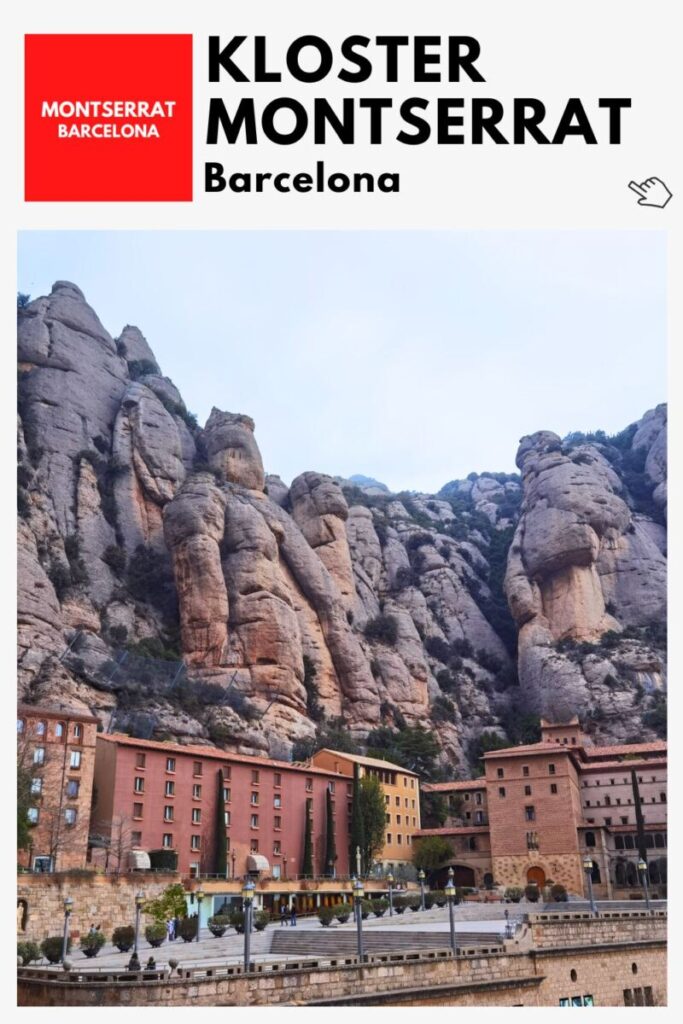
The Montserrat Monastery
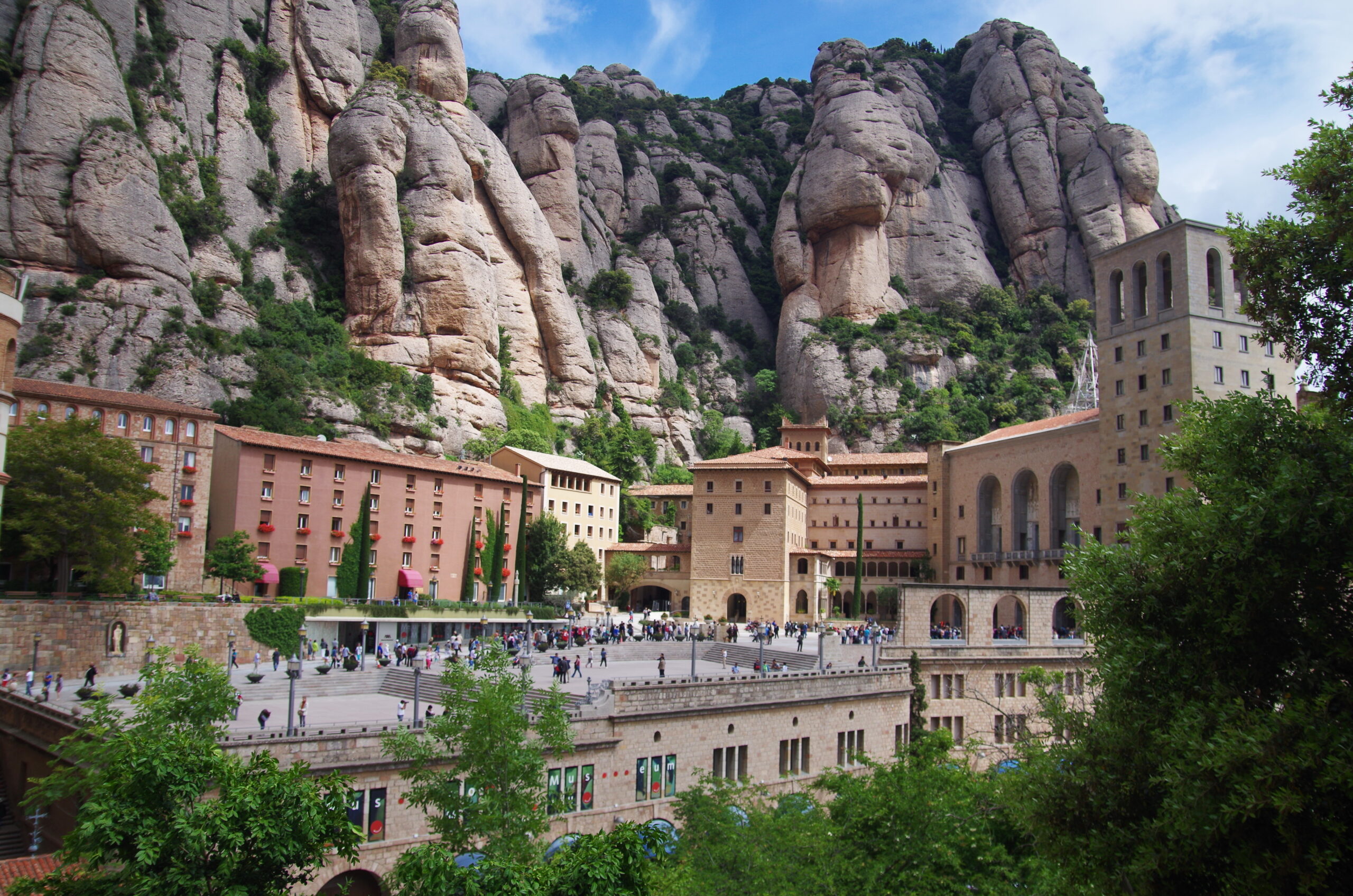
Imagine a monastery clinging to the rugged cliffs – that’s Montserrat. Just 50 kilometers from Barcelona, you’ll find this place, which is much more than just a church to the Catalans; it’s their heart and soul. Standing there, you’ll realize: breathtaking mountain scenery meets deep, living history.
The Benedictine monastery of Santa Maria de Montserrat is captivating simply because of its unique location! It sits high atop a mountain at 721 meters . But it’s not just the altitude that makes the location so special; it’s also the surrounding landscape: the bizarre, rounded rock pinnacles of Montserrat (which translates to “serrated mountain”) form a distinctive mountain range in Catalonia. Clinging to the rock face amidst them, the Benedictine monastery has been a place where spirituality and the untamed power of nature have converged for almost a thousand years.
You’ll find it about 50 km northwest of Barcelona . The monastery attracts many pilgrims from Spain and visitors from all over the world every year. Apparently, 2 million visitors come annually . After Santiago de Compostela, it is the second most famous pilgrimage site in Spain . It is a place with many tourists, yet at the same time a place of silence, contemplation, and encounter with history and spirituality.
It’s hard to believe, but the story of Montserrat began over a thousand years ago. It all started in the 11th century when Abbot Oliba de Besalú laid the foundation stone. Since then, the monastery has experienced a great deal: it was almost completely destroyed during the Napoleonic Wars and even had to endure expropriation by the state in the 19th century. That around 80 monks still live and pray there today according to the ancient Rule of Saint Benedict is truly a small miracle. They also run their own school there, where the boys from the famous choir not only learn to sing, but also how to navigate everyday life.
The basilica in the Montserrat Monastery
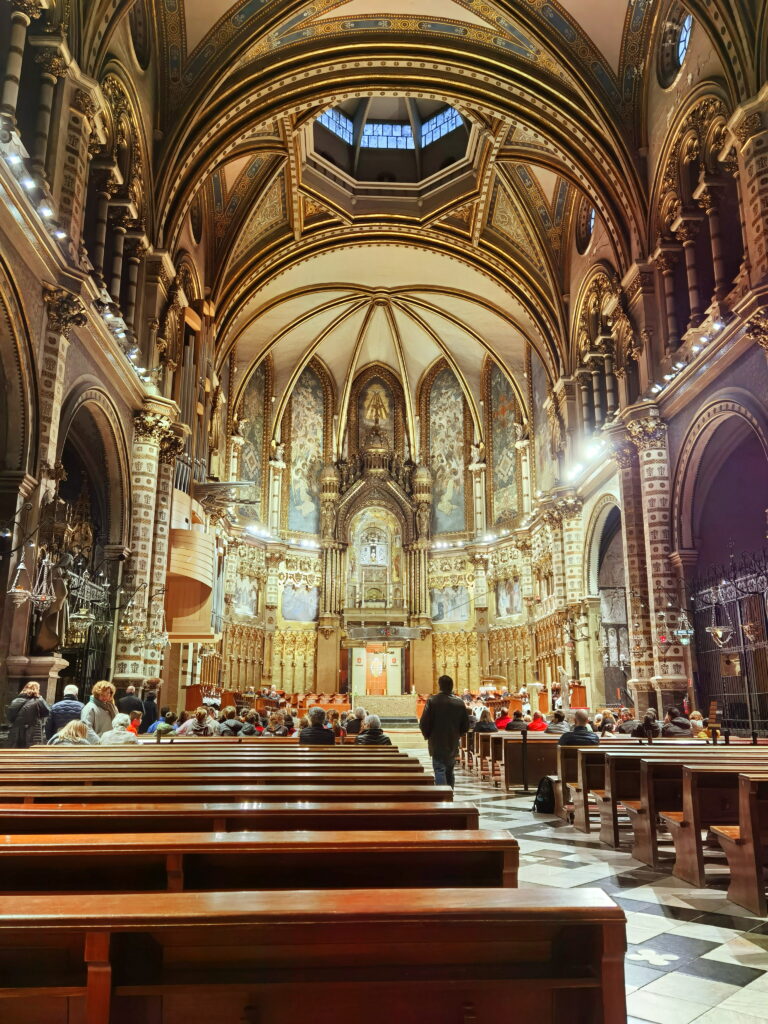
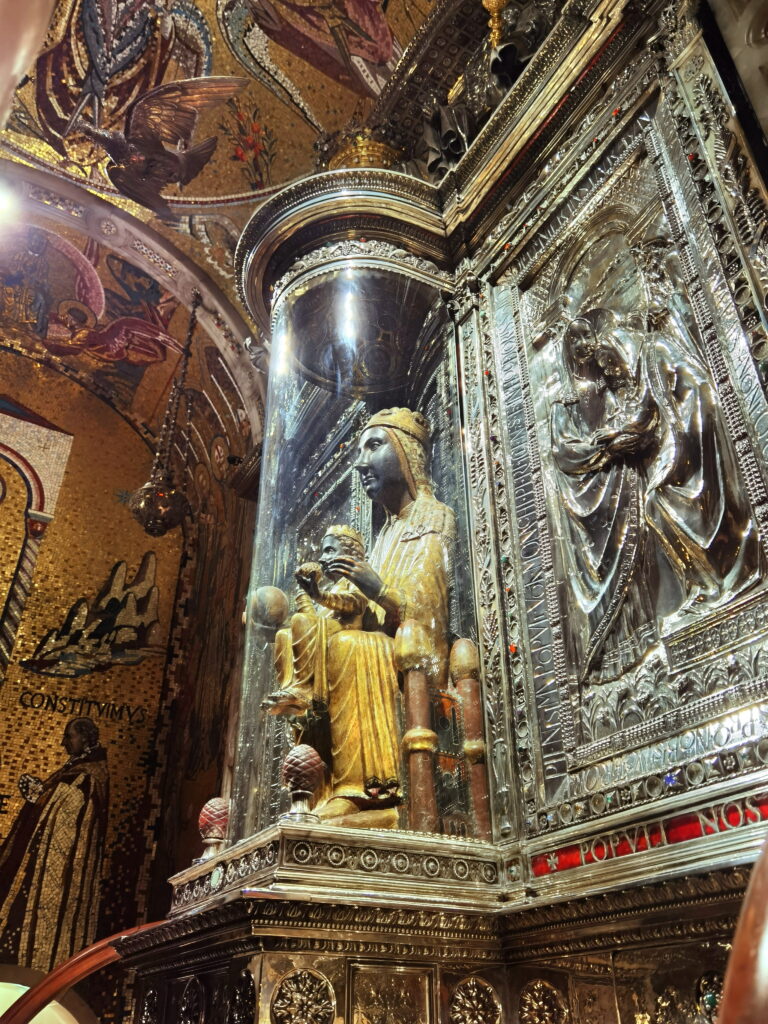
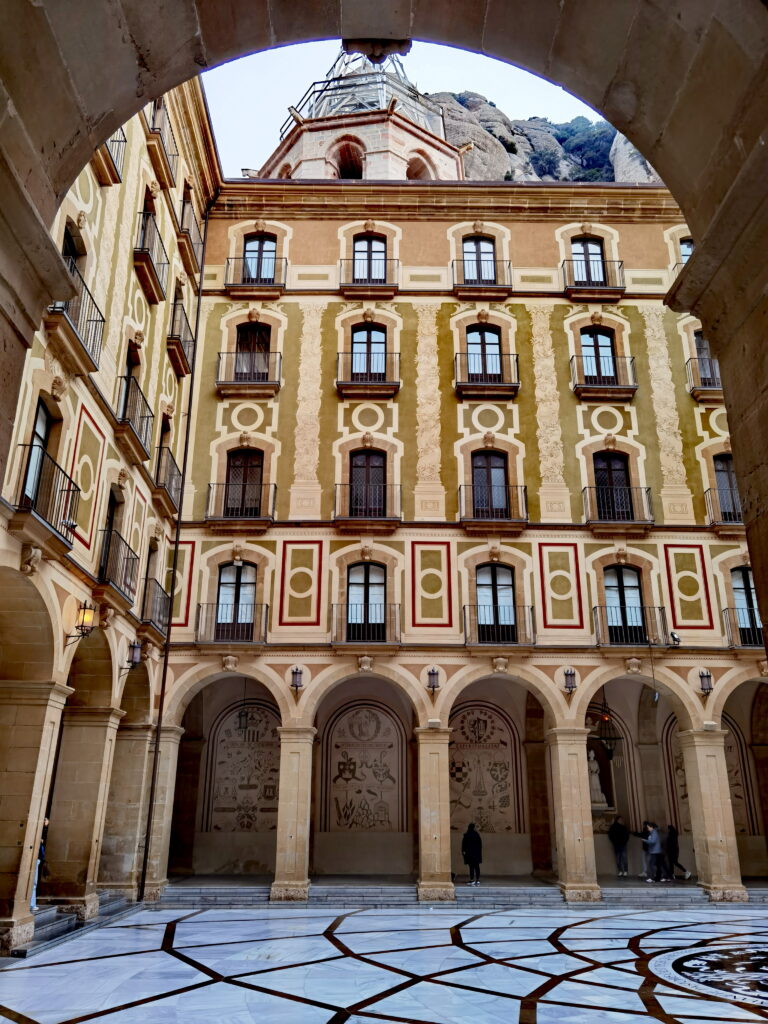
The monastery’s architecture is an impressive blend of different stylistic periods. The monastery church was elevated to a papal basilica in 1881. It incorporates Neo-Romanesque, Neo-Gothic, and Neo-Baroque elements. The real reason millions of people visit this mountain, however, is the ” Moreneta .” This Romanesque wooden statue of the Madonna is black—not because it was carved that way, but because the soot from millions of candles over the centuries has darkened the wood.
She sits enthroned behind glass in the basilica, but her right hand, holding a globe, protrudes. Touching this globe is an ancient tradition. For Catalans, she is much more than a religious figure; she is a symbol of their identity and freedom, one that has endured even in the most politically turbulent times. She is the patron saint of Catalonia. A separate entrance allows you to get very close to the Black Madonna. The journey there alone is an experience: Watch here all the info about the Black Madonna La Moreneta.
A visit to Montserrat Monastery isn’t complete without hearing the “Escolania de Montserrat.” This is one of the oldest boys’ choirs in Europe – the boys receive top-notch musical training right there on site. When they begin singing the “Salve Regina” in the basilica around 1 p.m., a very special silence fills the space. It’s a deeply moving moment, regardless of whether you’re religious or not. Since it’s extremely popular, you should definitely secure your spot early.
What many don’t know: Montserrat is home to one of Spain’s most important art museums, featuring works by Caravaggio, Picasso, and Dalí. In addition, Montserrat houses a collection of archaeological finds and liturgical objects, as well as an impressive library with over 200,000 manuscripts and printed works.
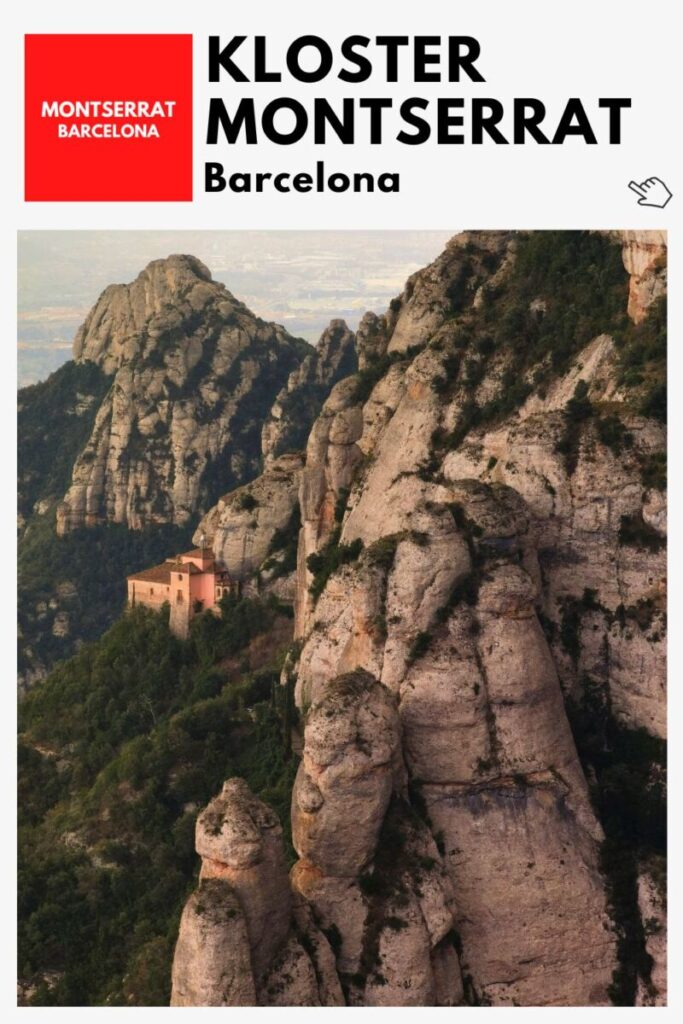
Beyond its spiritual and cultural significance, Montserrat is also a very popular destination for hikers and nature lovers . The mountains surrounding the monastery offer numerous marked hiking trails . From the monastery, you can hike up to small hermitages that are popular with pilgrims and tourists.
Overall, Montserrat is a place of contemplation and inspiration, touching its visitors with its beauty, its history and its spiritual depth, inviting them to immerse themselves in the stillness of nature and spirituality.
MONTSERRAT MONASTERY TICKET
If you want to visit the monastery, you need a ticket. Since it’s very popular, it’s worth planning ahead and securing your ticket. There are various ticket combinations available, depending on what you want to see. Here’s an overview of the currently available tickets:
–> Montserrat Ticket
The Montserrat Monastery sights
- Montserrat Monastery (Monasterio de Montserrat): The single-nave monastery church was built in the 16th century and marks the transition from Gothic to Renaissance architecture. It was severely damaged during the destruction of the monastery at the beginning of the 19th century and subsequently completely restored. In 1881, it was elevated to the rank of a basilica by Pope Leo XIII. The basilica is open daily from 7:30 a.m. to 8:00 p.m. Mass is celebrated at 11:00 a.m., and at 1:00 p.m. the boys’ choir Escolania de Montserrat sings the Marian hymn Virolai.
- La Moreneta (Our Lady of Montserrat): The miraculous image of the Black Mare de Déu is located in a chapel behind the chancel of the basilica. It is the main destination for many pilgrims to Montserrat. The statue of Mary is open daily from 8:00 to 10:30 a.m. and from 12:00 to 6:30 p.m.
- Museum (Museu de Montserrat): The museum houses a diverse collection of Egyptological mummies, Roman and Byzantine ceramics, and paintings from the 19th and 20th centuries.
MONTSERRAT MONASTERY TICKET
If you want to visit the monastery, you need a ticket. Since it’s very popular, it’s worth planning ahead and securing your ticket. There are various ticket combinations available, depending on what you want to see. Here’s an overview of the currently available tickets:
–> Montserrat Ticket
Further links for your trip
- all the information about Montserrat, Barcelona
- the current monastery of Montserrat prices
- here you can, at the monastery of Montserrat Parking
- the Montserrat opening Hours
- so goes the Montserrat arrival
Frequently asked questions about Montserrat Monastery
The Montserrat Monastery is officially known as the Benedictine Monastery of Santa Maria de Montserrat. It is a historic monastery in the Montserrat mountains of Catalonia, Spain. The monastery is renowned for its spectacular location at an altitude of 721 meters above sea level and is surrounded by towering rock pinnacles. It houses the statue of the Black Madonna of Montserrat, also known as “La Moreneta,” who is venerated as the patron saint of Catalonia.
Montserrat Monastery boasts several attractions that draw visitors:
Montserrat Monastery (Monasterio de Montserrat): The monastery church, built in the 16th century, marks the transition from Gothic to Renaissance architecture. Elevated to the rank of basilica by Pope Leo XIII in 1881, the church is open daily from 7:30 am to 8:00 pm and houses important religious artifacts.
La Moreneta (Our Lady of Montserrat): The miraculous image of the Black Mare de Déu (Our Lady of God) is located in a chapel behind the basilica’s choir. It is the primary destination for many pilgrims to Montserrat. The statue of Mary is accessible daily from 8:00 am to 10:30 am and from 12:00 pm to 6:30 pm.
Museum (Museu de Montserrat): The museum houses a diverse collection of Egyptological mummies, Roman and Byzantine ceramics, and 19th- and 20th-century paintings. It offers visitors insight into the rich history, art, and spirituality of Montserrat Monastery.
Boys’ Choir (Escolania de Montserrat): The Escolania de Montserrat, one of the oldest boys’ choirs in Europe, sings the Marian hymn Virolai daily at 1 p.m. The choir is an integral part of the spiritual experience for visitors to the monastery.
Yes, you can visit Montserrat Monastery on your own. There are several ways to get there, whether by car, train, or other public transport. Once you’re at the foot of the mountain, you can take the cog railway (Cremallera de Montserrat), the cable car (Funicular Aeri de Montserrat), or drive up to the monastery.
Once there, you can explore the monastery grounds, visit the basilica, admire the Black Madonna (La Moreneta), visit the Montserrat Museum, and explore the surrounding hiking trails. There are also several restaurants and souvenir shops on the grounds. –> Montserrat on your own
There are several ways to get to the Montserrat Monastery: You can drive up, hike up or take one of the two mountain railways – either the Montserrat rack railway (Cremallera de Montserrat) or the Montserrat cable car (Funicular Aeri de Montserrat).
Yes, it is possible to visit the monastery complex on major Christian holidays. The services are particularly atmospheric at Easter and Christmas. –> Montserrat Events